This post may contain affiliate links that support the site at no cost to you.

I’ve written about my issues with melasma before, and a protocol for treating melasma with microneedling.
This post is related — I’m talking today about the best chemical peel for sun damage. As I’m approaching 40, I’m seeing more and more sun damage popping up on my skin. I’ve only really been a diligent sunscreen user for the last five years or so, so it’s not surprising that I’m still dealing with the consequences!
So, this post is going to cover the light peels that can be done at home, and the deep chemical peels that can only be done in an office. (There are medium peels too!) The focus of this post is going to be to help readers figure out: is this something I can consider doing at home? What is the lightest peel that’s still going to achieve my goals?
And finally: this post is going to get real about the difference between what can be achieved with a chemical peel and what has to be done with a laser treatment.
What is a chemical peel and what do they do?
So, a chemical peel will use the same ingredients as a chemical exfoliant. A lot of types of peels will have familiar names: glycolic acid, lactic acid, and AHA (alpha hydroxy acid). What makes it a peel is that it’s a long stronger in concentration than the exfoliating serums you might be using a couple times a week.
Even within peels, though, they vary hugely in strength: you can get a superficial peel, which might give you no downtime and no peeling, all the way up to deeper peels that might require weeks to heal. (The deepest peels avalable might have wounds open for a month! But I don’t recommend those.)
All chemical peel procedure types are more or less the same: your skin is cleansed, a layer of the peel solution is applied and allowed to work on the skin for a while. The acid sloughs off the dead skin cells on your face. Depending on the type of peel, more layers of the peel solution might be applied. At the end of the treatment, the peel is neutralized.
All peels take off the top layer of skin, so all peels are going to give you a brightness to your complexion once your healing stage is over. They’ll all reduce skin texture and encourage cell turnover.
Beyond that, the amount of change in your skin depends on the depth of the peel. Deep scars left over from acne often require a deeper peel, but deep peels have their risks!
Chemical peels for sun damage
So, it’s worth getting clear about this: most chemical peels won’t make your sun damage go away, but it will make it look better. For a peel that might actually address the discoloration and dark spots, you’re looking at a deep peel that would potentially mean up to a month of downtime.
Which is not impossible! But for most people, it’s not worth it for sun damage. And those deep peels are often not available or recommended for people with darker skin tones.
So what most people are going to end up doing is a light or even superficial peels, which are going to make your sun spots look a lot better! It leads the outermost layer of skin to turn over, fading the appearance of those brown spots. The same is true of age spots!
So, a facial peel is not a forever solution to your sun spots. But it is going to give you a significant improvement, than you then have to maintain with sunscreen and (if you choose) hydroquinone. But we’ll come back to that.
You can get excellent results in this way, and you can then save up for laser (which will truly remove sun damage) if you so choose.
How to do a chemical peel at home – ground rules
So, doing a chemical peel at home is about as simple as you can get with DIY skincare. It’s easier than microneedling, and I did it for the first time before I ever used a dermaroller.
The trick is that you have to be smart, and you have to be conservative.
That means that the first bottle of peel that you use is a superficial peel, and you use that whole bottle before you move on to a stronger peel. Especially for sun damage: a superficial peel will improve the appearance of your sun damage! And for many skin types, superficial peels will be enough and you won’t need to try different types of chemical peels.
That means that you do your first peel with only 1-2 layers, and add slowly. You’re not scorching your face off before you get a chance to learn how your skin responds.
And you are wearing sunscreen, all the time, every day, everywhere the peel touches. The thing with a chemical peel is that you can do yourself so much skin damage if you’re not protecting your new baby skin. Chemical exfoliation makes you super sensitive to the sun. It would be so upsetting to start treating your sun-damaged skin and accidentally make it worse.
Honestly, chemical peels are simple and effective and there is really no reason to get fancy. I have found that I don’t need medium-depth peels. I’ve been doing a series of three peels every winter for about seven years now, and I never go deeper than 30% glycolic peels. Keeping it light means I get no side effects and minimal downtime.
Stronger peels are right for some people though — even if you are eventually looking to address significant texture issues that might require a medium chemical peel, start light. You will see improvement from superficial and light chemical solution options.
Chemical peel for sun damage at home – plan
So, you’ll start with your superficial chemical peel agent (options listed below for different situations!) and, if you can get it and are okay with it, hydroquinone.

- Clinically Shown to Fade Dark Spots and Discolorations: Ambi Even & Clear Advanced Fade Cream has been clinically studied to safely fade stubborn dark spots, including those caused by acne, and improve uneven skin tone
- Results In As Little As 2-3 Weeks: This formulation fades stubborn dark spots and skin discolorations for an even, natural skin tone in as little as 2-3 weeks
- Ambi Even & Clear Advanced Fade Cream contains 5% niacinamide to fight hyperpigmentation, licorice root extract to reduce dark spots and even skin tone, and PHA to exfoliate dead skin cells, improving texture and skin tone
- For All Skin Types: Ambi Even & Clear Advanced Fade Cream hyperpigmentation treatment is suitable for all skin types: For day and/or night time use
- From The Skin Tone Authority: For 50 years, Ambi has been rooted in catering to the skincare needs of women and men of color, blending science and nature to create affordable, high-quality skincare products
Put super briefly: hydroquinone can not be sold in many countries because there’s some evidence that it’s carcinogenic. In the US, the recommendation is to use it for 3 months and discontinue it for 3 months. Personally, I use it during my series of peels and then don’t use it the rest of the time.
Okay, so your treatment plan is this:
Every day
- Sunscreen, reapplied every two hours, SPF of at least 30 and ideally 50, with UVA protection. You can read more about UVA protection in sunscreen here.
- Hydroquinone, if you choose to use it, at night
Once every three weeks
- Perform your chemical peel. More directions on this below. Start with three-week intervals, and you can move to every two weeks as long as your skin seems to be tolerating it.
If you are ordering the peel, start the sunscreen routine today. You’ll get better results if you’re already limiting sun exposure and your skin isn’t healing from recent sun damage.
How to do a chemical peel for sun damage at home
For superficial and light chemical peels, it’s pretty easy to do.
A few days before you start, stop using any type of exfoliant, and tretinoin or retinols if you use those. Step up your sunscreen use.
- Wash your face with your preferred gentle cleanser and let it air dry.
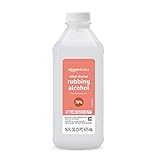
- Wipe the skin you’re going to treat with rubbing alcohol to remove all oils.
- Pour a little of your chemical peel solution into a small cup. Many people use a shot glass; I use the cap from an old facial cleanser. It shouldn’t be plastic or the peel will eat through it. It might be tempting to skip this step, but I once put a brush directly into the bottle and splashed it all over myself pulling it out. Not worth it

- Apply the peel solution to your skin. Two options here: many people use gauze to wipe it over, which is easy and probably in your medicine cabinet right now. I bought a cheap fan brush because I think it wastes less product.
- Wait. Check the directions for your specific peel, but 5 minutes is typical.
- Apply another layer if desired. If you are feeling just tingling or manageable burning, and no part of your skin has turned white, you can apply another layer and repeat the wait period. The second round will generally feel more intense. You can use a fan or cold air to manage your discomfort, but you shouldn’t use water or ice.
- Neutralize the peel. For most superficial peels, water is enough! Some stronger peels will require a specific solution, or that you add baking soda to the water. (I used to do this anyway when I first started, just in case, but it isn’t necessary. Go ahead and do it if it makes you more comfortable.
Once the peel is done, you’re on sunscreen duty 100% of the time.
After your first peel, you’ll experience some redness, but you’ll have younger-looking skin with reduced fine lines pretty much right away. A superficial peel will generally give you flaking, if anything, not peeling, and sometimes nothing at all. You’ll have significant brightness as well! It’s important that you stay on top of the suscreen.
After the second peel, especially if you’re using the hydroquinone, you’re likely to see a significant improvement in uneven skin tone and sun damage.
You can do six or so peels before taking a break; you’ll probably be pretty close to your desired results by then, and you’ll be benefitting from the collagen production. (Chemical peels cause collagen production, but that’s a slower result that can take weeks to show up.)
Best chemical peels for sun damage – at home
Okay, so I’m going to start with a company that I love, even though I can’t give the little affiliate link box thing (and honestly, I do not make money off of these links like I do the boxes! But I think this is the best line.)
Makeup Artist’s Choice does a ton of custom blend peels that I think are terrific for sun damage. Let’s start with mandelic acid.
25% mandelic acid – Makeup Artist’s Choice
MUAC does a mandelic acid peel in two strengths — 25% and 40%. I linked the 25% because that’s where you should start. There are two great things about mandelic acid: it’s great for deeper skin tones, and it’s great for oil and acne breakouts.
If you are a person of color, mandelic is a great place to start because it’s specifically recommended for not causing hyperpigmentation! Many peels can be too harsh for deeper skin tones. If you look at the reviews on their website, many of the reviewers are women of color–for chemical peels, you want to be sure that other people who look like you are using it!
And then also, if you tend to get blackheads or clogged pores, mandelic will help with that.
Fade peel – Makeup Artist’s Choice
The fade peel from MUAC is a blend of acids that all work together to remove sun damage and skin imperfections. Using this with hydroquinone has been a really effective way of addressing sun damage for me! It’s a low-downtime peel with few potential risks. Their directions (they’re on the website) suggest using the peel weekly, but that would be too much for my sensitive skin. I’d encourage others to start slow if they choose to start here.
Combo Lactic/Salicylic and Glycolic peel – skin obsession

- 2-phase AHA + BHA exfoliating peel — combines 40% Glycolic Acid (AHA) with Salicylic Acid (10%) and Lactic Acid (5%) (BHA) for a thorough surface exfoliation experience.
- Helps visibly improve the appearance of skin tone and texture — formulated for oily and congestion-prone skin types seeking a deeper exfoliating peel.
- Easy to use 2-step system — bottles are labeled Step 1 and Step 2 with clear instructions included. Each kit provides approximately 6 months of monthly peels.
- Visibly smooths the look of fine lines and helps improve the appearance of uneven skin tone and dullness over a full course of peels.
- Cruelty-free, paraben-free, made in the USA — significant savings compared to professional peel treatments.
This combo peel would be amazing for someone who was also dealing with acne! The different acids in this address different things, so you’re going to get a light chemical peel with some oil reduction and control.
And when to just go get laser…
The truth is that the only thing that’s actually going to knock out your sun damage permanently is a laser treatment.
I got a laser treatment about three years ago (Cutera, if you’re curious). It was great for a year and pretty good for a year, but now the sun damage is creeping back in. Because it takes so long to appear, I’m now seeing the sun damage from my choices ten years ago! It was the right choice, and I’m glad I don’t have the old sun damage on top of this, but it’s a lot of money, too.
If you can pay for it and you just want to see it gone, by all means go get a laser treatment. Be very clear if any of your spots are melasma!
If you can’t pay for it right now…the DIY chemical peels will keep it in check as long as you’re wearing sunscreen. Maybe you save up for it, and maybe you decide that when your skincare is on point, it doesn’t bother you as much!
At any rate, the money you save from not going for professional peels will add up to the cost of laser pretty quick.


Leave a Reply