This post may contain affiliate links that support the site at no cost to you.

Microneedling is an amazing cosmetic procedure. A microneedling treatment can lead to collagen production, cell turnover, improved skin tone, reduced acne scarring or stretch marks…and it’s cheap, simple, and pretty low-risk.
BUT it’s not no-risk. If you don’t follow basic hygienic practices, you can put yourself in a pretty bad spot.
One of the risks of at-home microneedling is when people don’t read or learn enough before they start. They might miss one of the important rules that someone trained in microneedling would learn on their first day.
So this post is for people with active acne! Microneedling is super effective for acne scarring, and for that reason it’s probably one of the most popular cosmetic treatments for acne sufferers. But, if you’re still experiencing breakouts, you need to know how to deal with those too.
Can microneedling cause acne? Yes, if you’re not following these rules!
Microneeding and (old) acne scarring
So, you probably already know that microneedling is an effective treatment for pitted acne scarring. If you have deeper, old acne scars, microneeding is an excellent, inexpensive way to “fill in” those pits and reduce the appearance of scars. Even if they’re a few years old!
It’s called percutaneous collagen induction therapy – the tiny needles create small, controlled injuries in the surface of the skin. When the body goes in to heal them, the new skin has fresh new collagen.
Collagen will also change the appearance of large pores or the “orange peel skin” that sometimes results from acne.
Acne scarring is one of the first skin issues that microneedling was ever used for, and it tends to get better results quicker than many other skin conditions. People will generally see significant improvements in just a couple treatment sessions. The production of collagen will bring the sunken scars up to the level of the rest of the skin.

This is an amazing, effective, super well-documented process that has been helping people for decades now. If you choose to do it in a dermatologist’s office, you’re looking at $200-$300 in the US depending on where you live. If you want to do it yourself at home, it’s relatively low-risk and extremely low-cost if you do it right. (I’m going to tell you how to do it right later in this post!)
If you’ve still got active acne, though, there’s some more things you need to know.
Can microneedling cause acne or make acne worse?
If you have acne right now, that’s going to change the plan for you. You can not microneedle over active acne. Microneedling can make acne worse.
That doesn’t mean that if you are still getting acne flare-ups, you can’t microneedle at all. It just means that the little needles cannot touch an active pimple.
If you think about it, it makes sense: if the needles from your dermaroller or microneedling pen puncture your pimple, they’re going to get bacteria on them. And then that bacteria is going to get pushed into your skin over and over again while you continue your microneedling session.
You can imagine how this could get really bad, really fast: two or three active lesions on your face could become hundreds. So, it’s a good idea to be really cautious if you’re microneedling at home, and to avoid any active acne breakouts.
(A quick aside: there are corners of the internet that are going to advocate for microneedling over active acne! Honestly, I keep it cautious here because I’m not talking to one person with one experience. My suspicion is that it probably depends on the root cause of your acne. But if everyone knew the root cause of their acne, they wouldn’t suffer with acne anymore! So, for my own part: if you have an active breakout, skip the microneedling procedure.)
So, this now depends on your skin: if it’s a few zits and you’re confident you can go around them, go ahead and microneedle. The small punctures will bring healthy new skin to the treated area. Where the pimples are, you can treat next time. One of the great things about microneedling at home is that if a treatment is only 80% effective, it kind of doesn’t matter, because you own the stuff and you can do so many more treatments than you could if you were going in an office.
I have a lot of acne right now. What can I do instead?
If you’re already open to the idea of DIY skincare, a chemical peel would be a great choice for both the appearance of acne scars and active acne. It’s also great for the appearance of fine lines, and for creating an overall glow.
I’m planning on a post about chemical peels for acne scarring, just to mix it up, but in general you’re looking for one of the alpha hydroxy acids. If you’re doing it at home, you don’t need and shouldn’t choose a super intense deep peel. A 30% glycolic acid peel is a great general purpose peel that’s going to have you peeling but isn’t going to require you to hide out for ten days.

- STRENGTH LEVEL – Do not use 50% until you have used a Level 1 Glycolic 30% or 10% first.
- MOISTURIZES SKIN – Aside from making your skin smooth and clear, our peel also improves your skin’s hydration.
- EXFOLIATES SKIN – Regular use helps exfoliate and maintain a more clear complexion.
- GLYCOLIC - Glycolic promotes exfoliation and skin hydration
- RETINOL - Retinol works to smooth and firm
For skin of color, consider a mandelic acid peel instead. Mandelic acid is gentler on deeper skin tones. People of color are more likely to experience hyperpigmentation in response to skin trauma, so a lower and slower strategy with peels will get the best results.
I also have to shout out a company that I love, even though I can’t do a little box for this peel: Makeup Artist’s Choice makes a bunch of specialized peels, including a Mandelic + Salicylic Acid peel that to me is just a combination of everything good! Salicylic will address oil, active acne, and skin texture. Mandelic is going to treat old acne scars, dark spots, and it’s safe for all skin tones. I can’t recommend this product highly enough for someone who wants to treat acne scarring while also managing active acne.
I’m going to write a full post about this soon, but if you decide to go this route in the meantime: peels make you SO sensitive to the sun and you have to wear sunscreen if you’re using peels! No matter how young you are, no matter what your skin tone, no matter how trendy a tan suddenly is again, you now have sensitive skin. Smooth skin! But sensitive.
I’m having a breakout and I have a microneedling appointment. Do I cancel?
If you’re an in-office microneedling girl, I totally get that! It still works, it’s just more expensive. Especially if you’re doing something like platelet-rich plasma, which has great evidence behind it but just can’t be done at home!
Anyway: if you’re scheduled for microneedling and suddenly have active breakouts, call the office you’re going to.
Me, personally, I would probably reschedule my appointment if the breakout was on more than like 10% of my face. They’re not going to charge you less because they’re doing less of your face, you know?
But in my experience with this blog, there are two basic priorities people have. Some people care most about keeping the treatments relatively inexpensive, even if it takes longer. And others want it done as quickly as possible, even if that means paying more.
And often, people with acne scarring are part of the second group. They want it gone now or as close to now as possible. And I get that — it’s on your face! And moreso than the appearance of wrinkles, which come on slowly, acne scarring can feel really obvious. So if you have the money to go in office, and you want it gone as quickly as possible, go for it.
Likewise: if you don’t mind paying 100% of the cost to have 80% of your face rolled if it means not having to wait a week for the treatment, by all means keep the appointment. Sometimes they can even do something else for you that reduces the acne while you’re in there. (There is a special place in my heart for the woman who lanced a giant zit on my cheekbone the day before my senior prom.)
Can I get microneedling during Accutane?
No, I’m sorry.
Your skin is going through so much while you’re on Accutane that you run the risk of adverse reactions, potentially including worse scarring.
Accutane is such a nightmare and you have my sympathy! But most people are going to need to wait 6 months after finishing Accutane to do any kind of microneedling.
In the last few years I’ve heard of a few cases where the dermatologist prescribing the Accutane will approve microneedling done in their own office! So by all means ask your derm, and if they say yes, go for it. But, if she says yes, that doesn’t mean you should go home and fire up your dermapen. You’ve got super sensitive skin and it should be handled by a pro.
I definitely would not advocate for DIY in this case! As much as I love DIY and think a reasonably intelligent person can handle a lot on their own, I really think it’s better not to push your skin when you’re dealing with harsh acne treatments like this.
How to microneedle around active acne
Be sure to patch test first, if this is your first time!
Let’s start with what you’ll need:
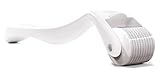
- A 1.0mm dermaroller or microneedling pen
- 70% isopropyl alcohol (has to be 70%!)
- dish soap
- A gentle cleanser (not a soap!)
- Hyaluronic acid serum (optional for the dermaroller, required for a microneedling pen!)

- Dealmed Isopropyl Rubbing Alcohol 70% USP, First Aid Antiseptic, 16 fl. oz, (1 Pack): Used in a wide variety of industrial and household chemicals, and is a common ingredient in chemicals such as antiseptics, disinfectants and detergents.
- Antiseptic and Disinfectant: Dealmed Isopropyl Rubbing Alcohol 70% USP is used in a wide variety of industrial and household chemicals, and is a common ingredient in chemicals such as antiseptics, disinfectants and detergents. This isopropanol is an effective infection fighter. 70% alcohol can also be used as an antiseptic for disinfection of minor wounds.
- About The Product: Active Ingredient: Alcohol Isopropyl (70%); inactive ingredient: Water. This disinfectant is widely used within pharmaceutics, hospitals, cleanrooms, and electronics or medical device manufacturing.
- First Aid Help: Isopropyl Alcohol is the first aid to help prevent the risk of infection in minor cuts, scrapes, animal bites or serious burns. It can be applied as a cooling, soothing application for patients and athletes.
- Multi-Purpose Use: Alcohol solution is used in making cosmetics, skin and hair preparations, pharmaceuticals, perfumes, lacquer formulations, dye solutions, antifreezes, soaps, window cleaners.

- CETAPHIL FRAGRANCE FREE DAILY FACIAL CLEANSER: Reinforces the skin barrier, balances skin and minimizes the appearance of pores, now in a fragrance free formula
- IDEAL FOR SENSITIVE, COMBINATION TO OILY SKIN: Clinically proven to deep clean by removing dirt, excess oils, impurities and pollution microparticles
- DEVELOPED FOR EVEN THE MOST SENSITIVE SKIN: The hypoallergenic, non-comedogenic formula is free of parabens and sulfates
- DERMATOLOGIST RECOMMENDED for Sensitive Skin
- DEFENDS AGAINST 5 SIGNS OF SKIN SENSITIVITY: Dryness, irritation, roughness, tightness and a weakened skin barrier

- Immerse yourself in the restorative power of Cosmedica Skincare’s Pure Hyaluronic Acid Serum, a standout in our line of vegan, cruelty-free skincare essentials. This high potent serum, perfect for all skin types, works wonders on your face. It hydrates deeply, helps treating dry patches and uneven skin tone to reveal a naturally radiant glow. The serum’s remarkable firming properties helps reduce the appearance of wrinkles, resulting in skin that's not only moisturized, but also youthful & rejuvenated.
- Take control of your hydrating skincare routine with this powerful serum that outperforms traditional in-office treatments. Our Hyaluronic Acid Serum holds up to 1,000 times its weight in water, delivering unparalleled hydration and a unique plumping effect that helps combat early signs of aging. Say goodbye to deep wrinkles, and welcome a softer, smoother, and plumper skin. Formulated to provide undereye darkening support, this serum is designed to help diminish the appearance of early signs of aging over time
- Even the most persistent forehead lines meet their match with our Pure Hyaluronic Acid Serum. This dynamic product infuses your skin with essential moisture, helping to keep it well-balanced and nourished throughout the day. Furthermore, our serum boasts superior brightening properties that helps reduce the appearance of dull, tired skin and promotes a more vibrant, radiant complexion every morning.
- Despite its powerful, transformative effects, our Hyaluronic Acid Serum is gentle on the skin. It’s been meticulously formulated to support effectiveness while maintaining skin health. Suitable for use both morning and night, this hydrating serum helps enhance the skin’s moisture balance, reduce the appearance of age spots, and contributes to a brighter, healthier-looking complexion for both men and women.
- Formulated to deliver advance hydration, our product offers a refreshing alternative to traditional anti-aging facial moisturizers or creams. Typical over the counter serums and facial care products may provide only temporary relief for dry skin and often contain a long list of unnatural ingredients. Our Cosmedica Hyaluronic Acid Serum works to help hydrate and plump the deeper layers of the skin with just three naturally derived ingredients.
(Quick note: if you already have a hyaluronic acid serum, just check it real quick and make sure it doesn’t have any other ingredients. Sometimes they’ll be blended with a Vitamin C serum or other ingredients that might be irritating while microneedling. You want a simple serum. I typically make my own from powdered hyaluronic acid and distilled water!)

- Elevate Your General Health and Well-being: Tailored to support your overall health, our Hyaluronic Acid powder supplement is the perfect addition to any lifestyle. Packed with essential nutrients, they're designed to boost your general well-being, keeping you feeling your best day after day.
- Tailored for Modern Lifestyles: Our Hyaluronic Acid powder, in Hyaluronic Acid 215mg, is not just about nutrition; it's about fitting into your modern lifestyle with ease. Whether you are a just starting a healthier living, or a health-conscious professional, our products are crafted to complement your dietary preferences and wellness goals.
- Convenient Powder Form for Easy Integration: Say goodbye to cumbersome pill regimes! Our Hyaluronic Acid supplement, or Hyaluronic Acid food grade, come in a versatile powder form, making it incredibly easy to integrate into any lifestyle. Just add it to your morning smoothie, juice or plain water can elevate your daily nutritional intake without any hassle.
- Transparent and Trustworthy: Experience the confidence that comes with choosing a supplement that not only meets rigorous third-party testing but also upholds the principles of clarity and integrity in its formulation and production.
- Commitment to Quality: All of our products are crafted in a facility that adheres to rigorous cGMP standards, ensuring the highest level of quality and safety. This dedication guarantees a consistent and reliable supplement you can trust to support your health and wellness routine.
- Sanitize your dermaroller or microneedling pen cartridge by fully submerging the needles in the isopropyl alcohol for a minute, then taking it out and letting it air dry.
- While your tool dries, wash your face with the gentle cleanser and swipe the isopropyl alcohol over the areas of your face that you’re going to treat. Don’t put the alcohol on the areas you’re avoiding. It might further irritate your acne. Put on gloves or wipe your hands with alcohol as well.
- I prefer to work one area at a time, starting with my cheeks. Once the alcohol has fully dried, apply the hyaluronic serum to that area. This will help the dermaroller or microneedling pen cartridge slide over your skin, so you get a more even result. I try to move in two passes: first, tight, overlapping horizontal lines, then tight, overlapping vertical lines. Like this:


Depending on what you’re using, you might do multiple passes. With a dermaroller, plan to do each row two or three times. With a dermapen, you might do it twice on a lower speed or once on a higher speed. I use a Derminator, so I only use one pass when it’s set to high.
When you come to an area where you’re going to need to go around acne, plan to stop a quarter of an inch before you touch it. You don’t want to hit it by accident!
When you’ve finished your microneedling, add more hyaluronic acid over the top. I sometimes also add a Vitamin C serum (after microneedling, never before and never as slip!). The research on Vitamin C for acne scars is pretty positive: this study says it’s not as good as PRP, but it’s pretty good. It stings a little though!


Leave a Reply